The art of subtraction
For four years Kamil Koźlarek put out no prints and sold nothing. He had sold prints of his photographs twice and wanted the third run to be better, and the standard he set for it was one he couldn't meet. The block lasted until he left his regular job to try making a living from photography. What came out of it is "Process", an album that covers three years of his work and, along with it, the modified car scene he photographs.
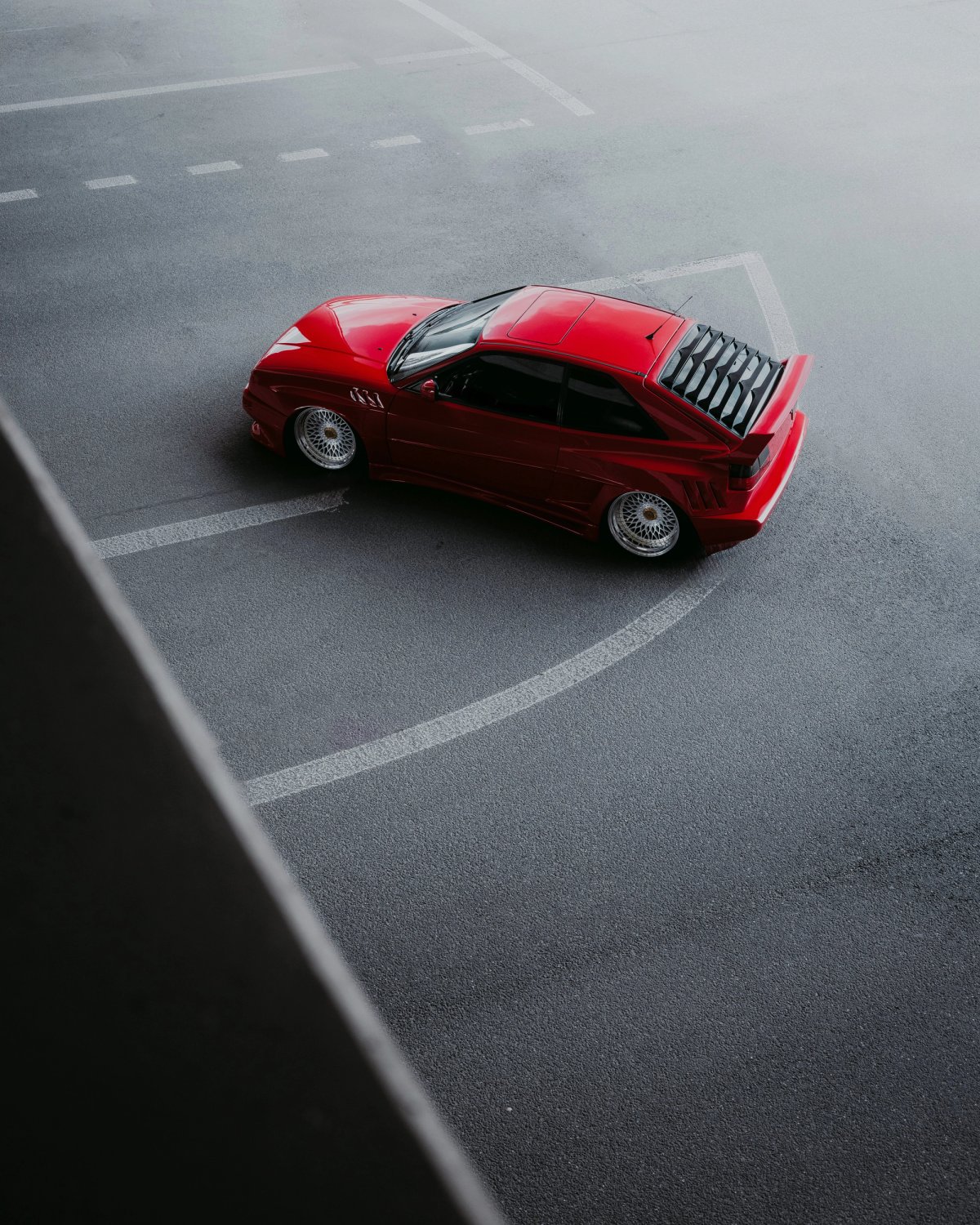
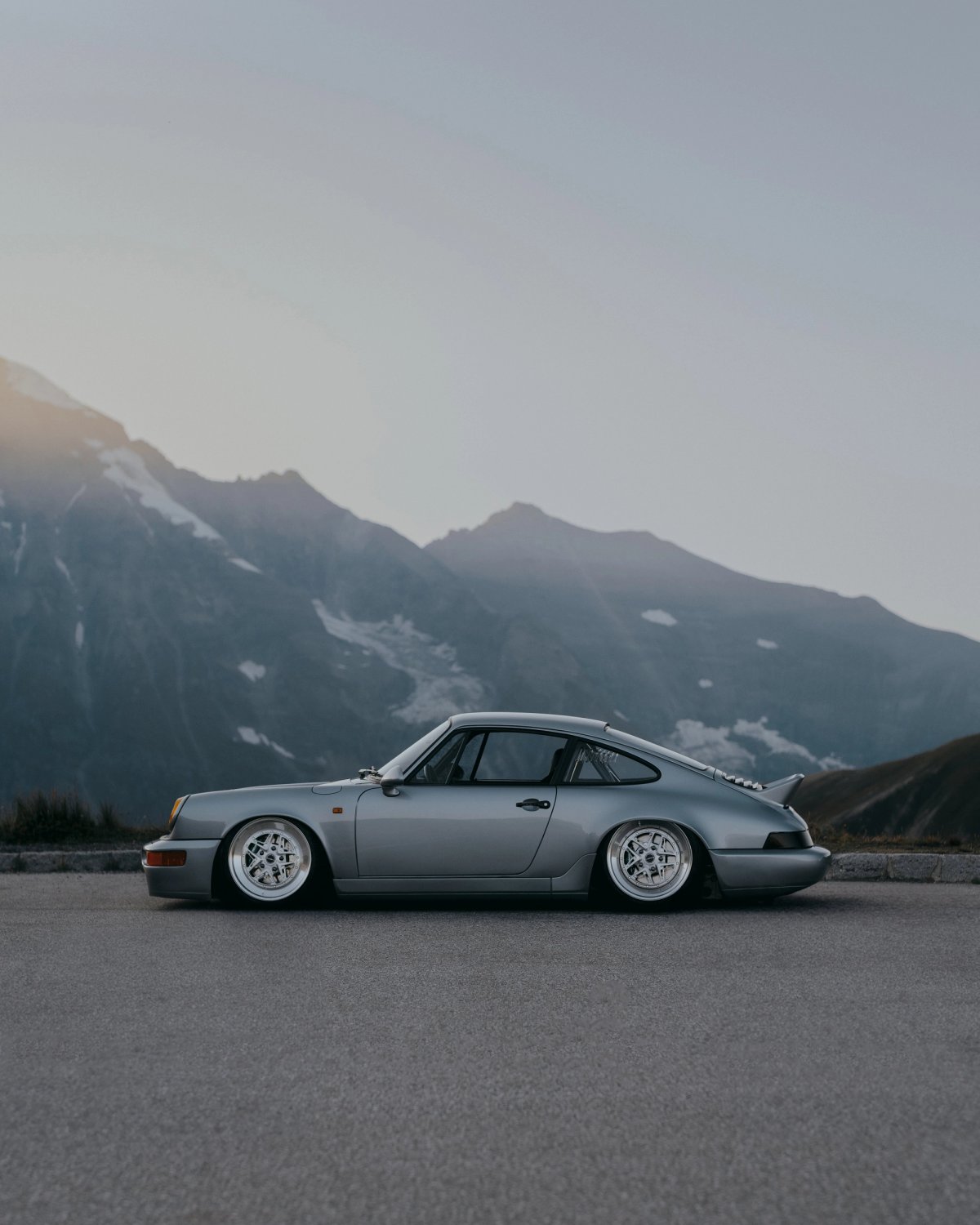
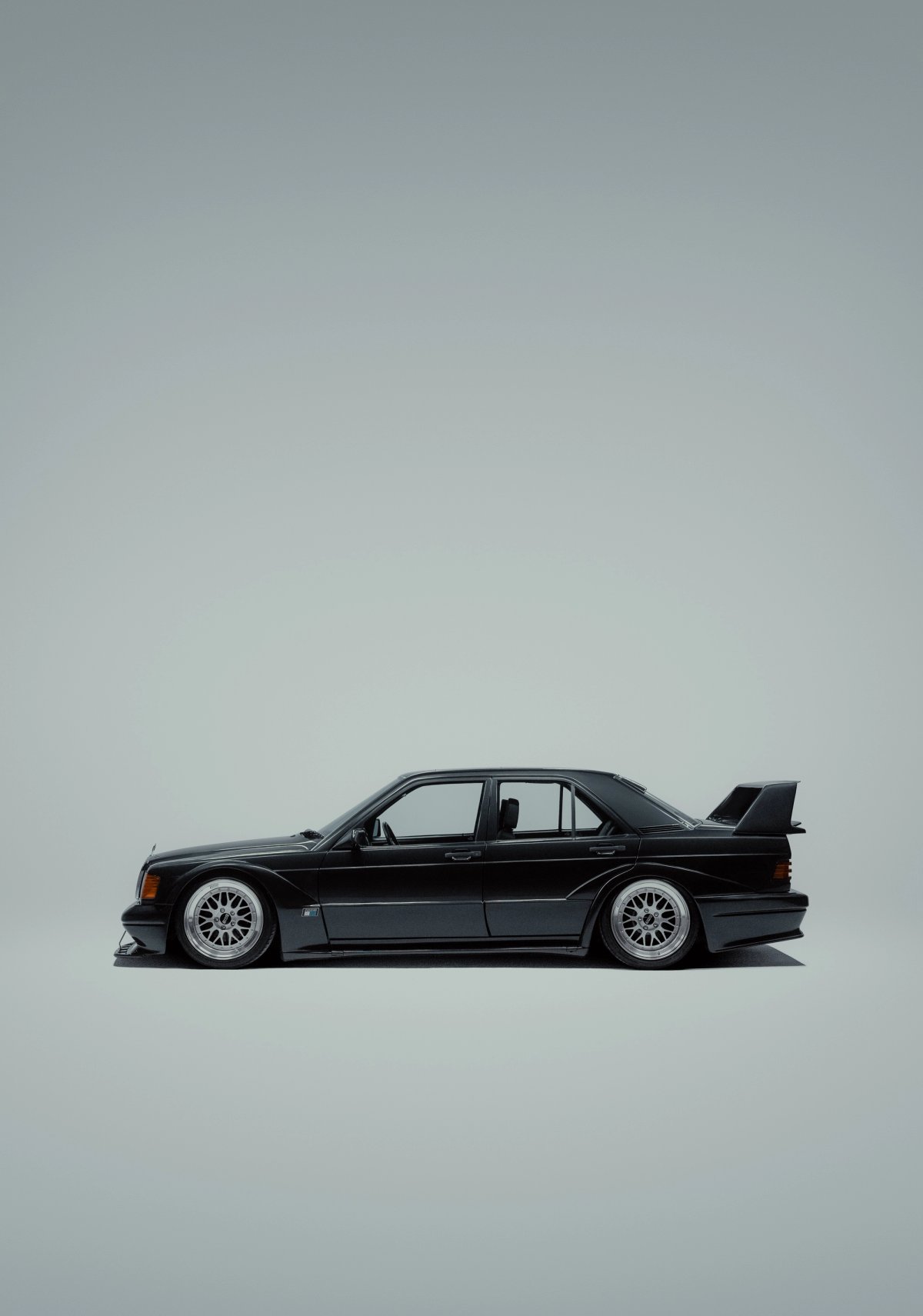
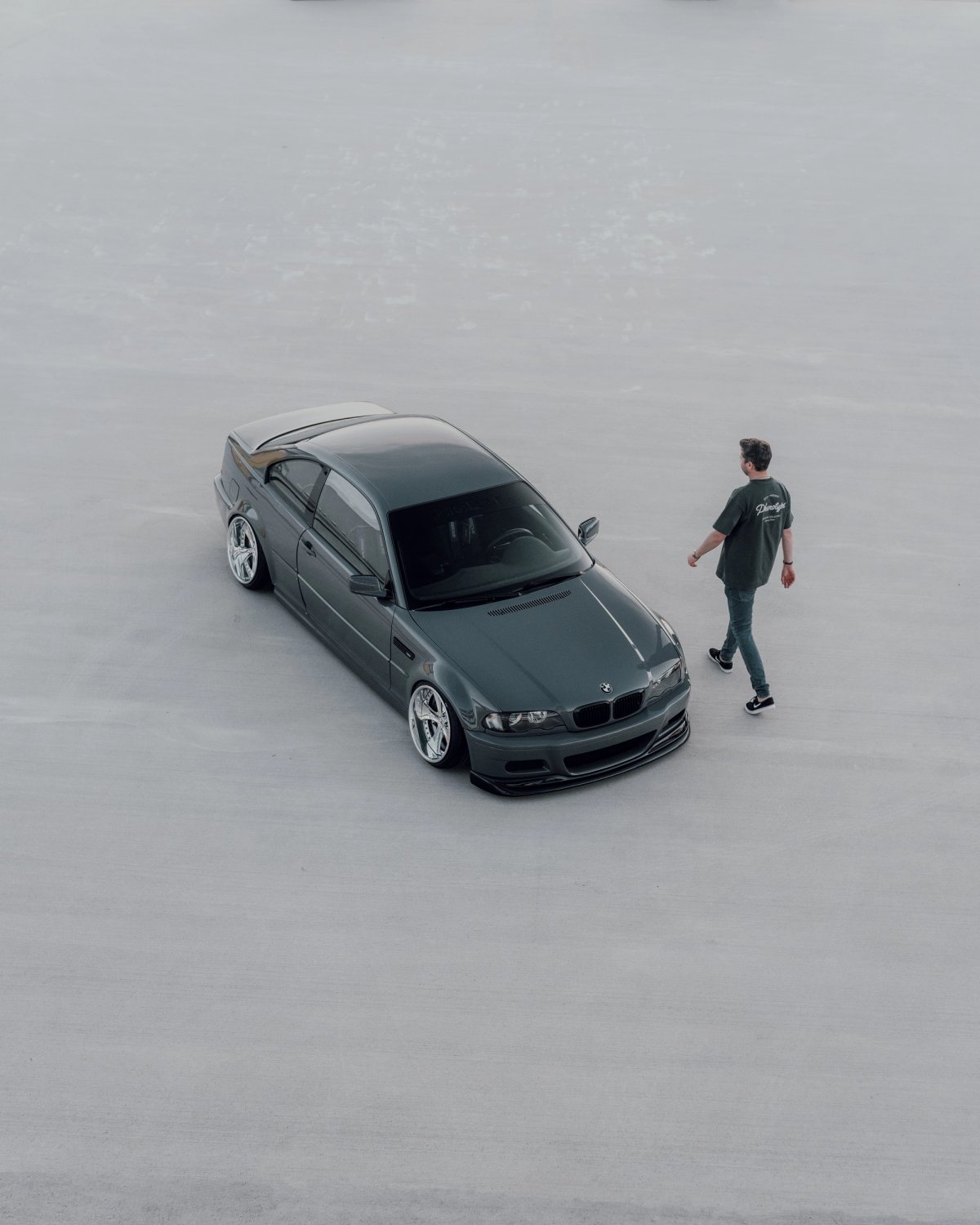
His photographs leave a lot out. Often there is one car on grey concrete or a studio backdrop, and the empty space around it carries as much weight as the car itself. He says the style came slowly, and mostly without his deciding on it. It started on an online car forum he was reading before he turned eighteen, possibly before he owned a camera.
How did you arrive at this style? Did you know from the start that this was the direction, or did it happen by chance?
I searched until I found it. It comes from the road you go down as a photographer. At the beginning you're simply happy to have a car in the frame. After a year you notice you could frame it differently, that the shot would be calmer if the car covered something distracting in the background.
Every year you spot more things you want to hide or control. In a way you're building your own world, showing reality the way you see it in your head. Years later it turns out this is exactly the picture I carry around inside me, and that's where the minimalism comes from.
I think it happened somewhat unconsciously. Privately I'm not a minimalist at all. I don't own three identical T-shirts and my desk isn't perfectly tidy. It's probably a way of breaking from everyday life. It grew over the years, and only part of it was a deliberate choice.
Who shaped your style the most, and what did they teach you?
That's hard to answer today. There's so much content now that, honestly, I couldn't tell you who inspires me at the moment.
But from the early years, yes. Right at the start, before I turned eighteen, I had an account on the Raceism forum [now Club de Ultrace]. I'm not even sure I owned a camera yet, but I read every thread. I remember the photos by Piotrek [JLZ1]. They blew me away. In those years he was doing something completely different, and when I scrolled through the forum his photos clearly stood out. Stylistically they were on another level.
Then I liked the photos by Dymha [Damian Kurant], which also felt fresh to me. After that I got really into the photos by Adrian Wojtal [@kodakwhat], a Canadian of Polish origin. It was a complete surprise that he spoke Polish. We ended up meeting, we got on, and it turned into something nobody expected. For a while he had a very strong influence on how I saw photography. He definitely opened my mind.
Back then heavy contrast was in fashion, a gradient from the bottom, another from the top, some flare added. He shot in a very soft style that hardly anyone was using. That soft style is popular now, so you could say he was ahead of his time.
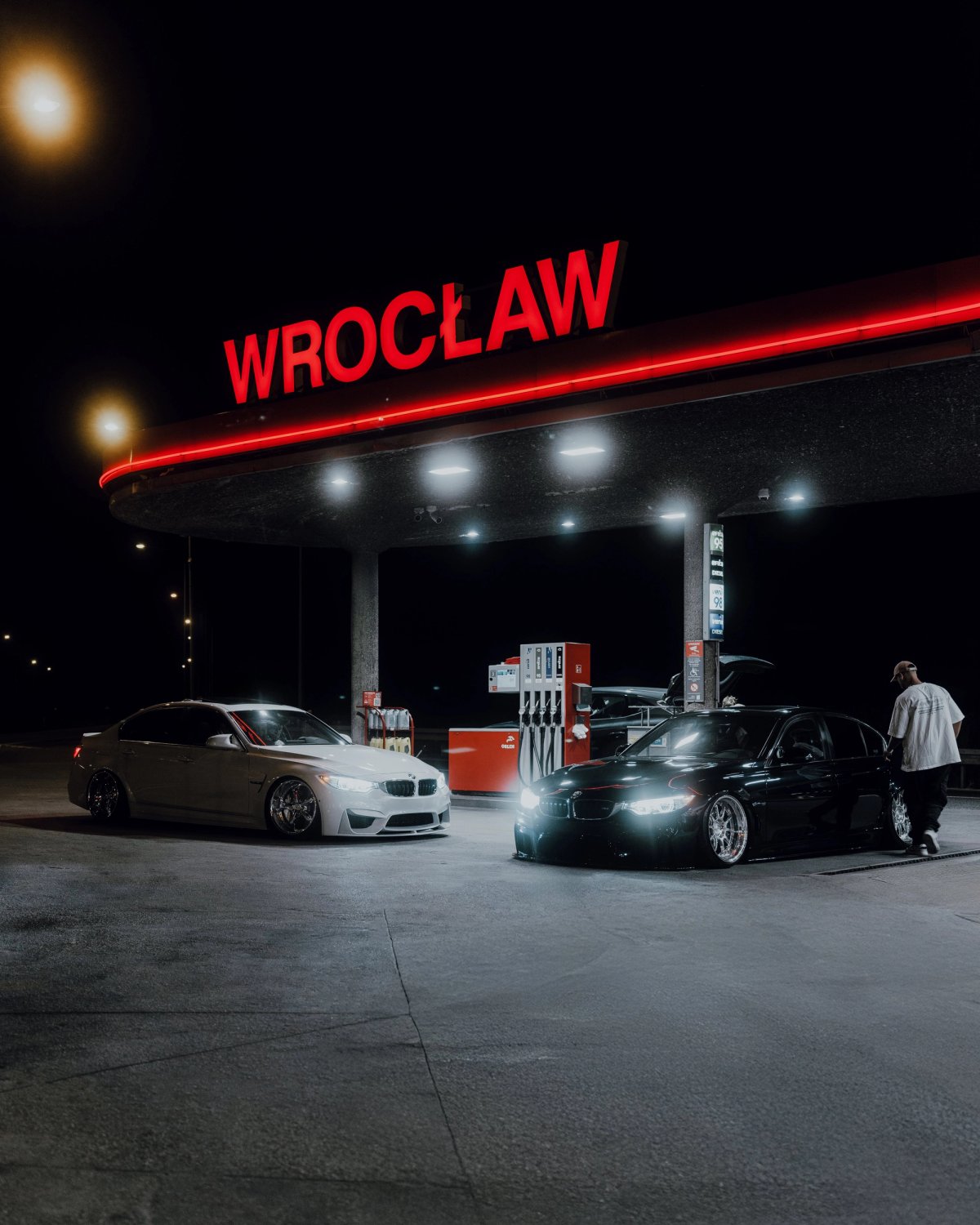
Perfect light or perfect composition. If you had to pick one?
Composition, I'd say. You can always work around the light somehow. Outdoors, definitely composition. In the studio, obviously light.
When you look through the viewfinder, do you see a machine, a sculpture, or a character with a story of its own?
Sculpture is a good word for it, in terms of shape. I look at how the surfaces change, at the body lines, the details, how the light reacts to all of it.
A sculpture in its form, but also a canvas for the owner's work. Very often the car itself is stylistically bland, not much going on. But if the owner has a great idea, good sense and knows what goes with what, you suddenly get a striking car that outshines any elaborate design.
So it's the car's own shapes as the base, plus what the owner has made of it.
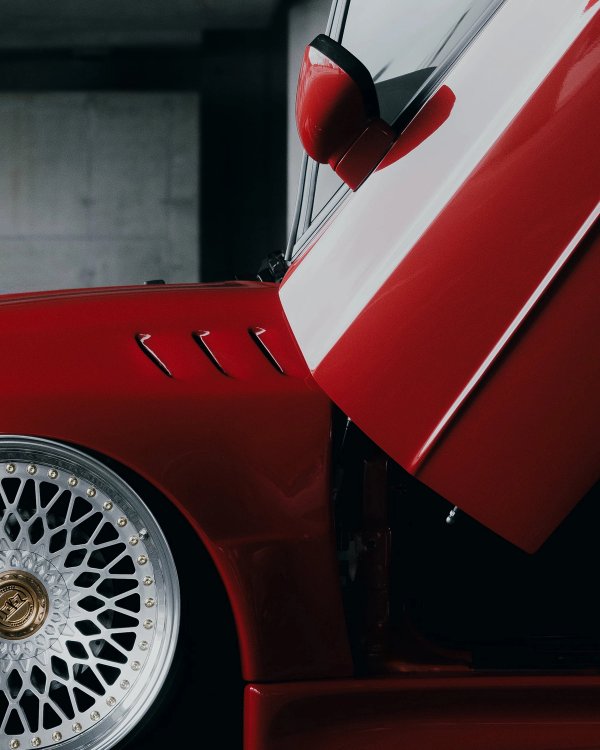
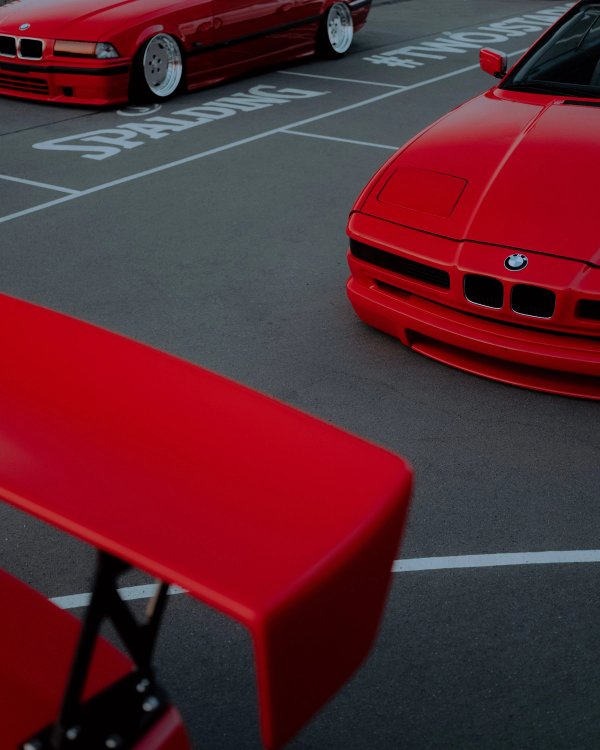
Has photographing a particular car ever changed what you thought of it?
I'll split that in two. There are cars that hit you with their form, and there are cars you experience on the move, which stay in your head for a long time.
On looks, this year two cars literally gave me goosebumps. The first was an F40 at the Ferrari Museum in Italy. I know, it's a cliché, but I'd never seen one in the flesh. In person it was even better than in photos. I stood by it for maybe thirty or forty minutes, walking around it, forgetting I was meant to be shooting, just absorbing what was in front of me.
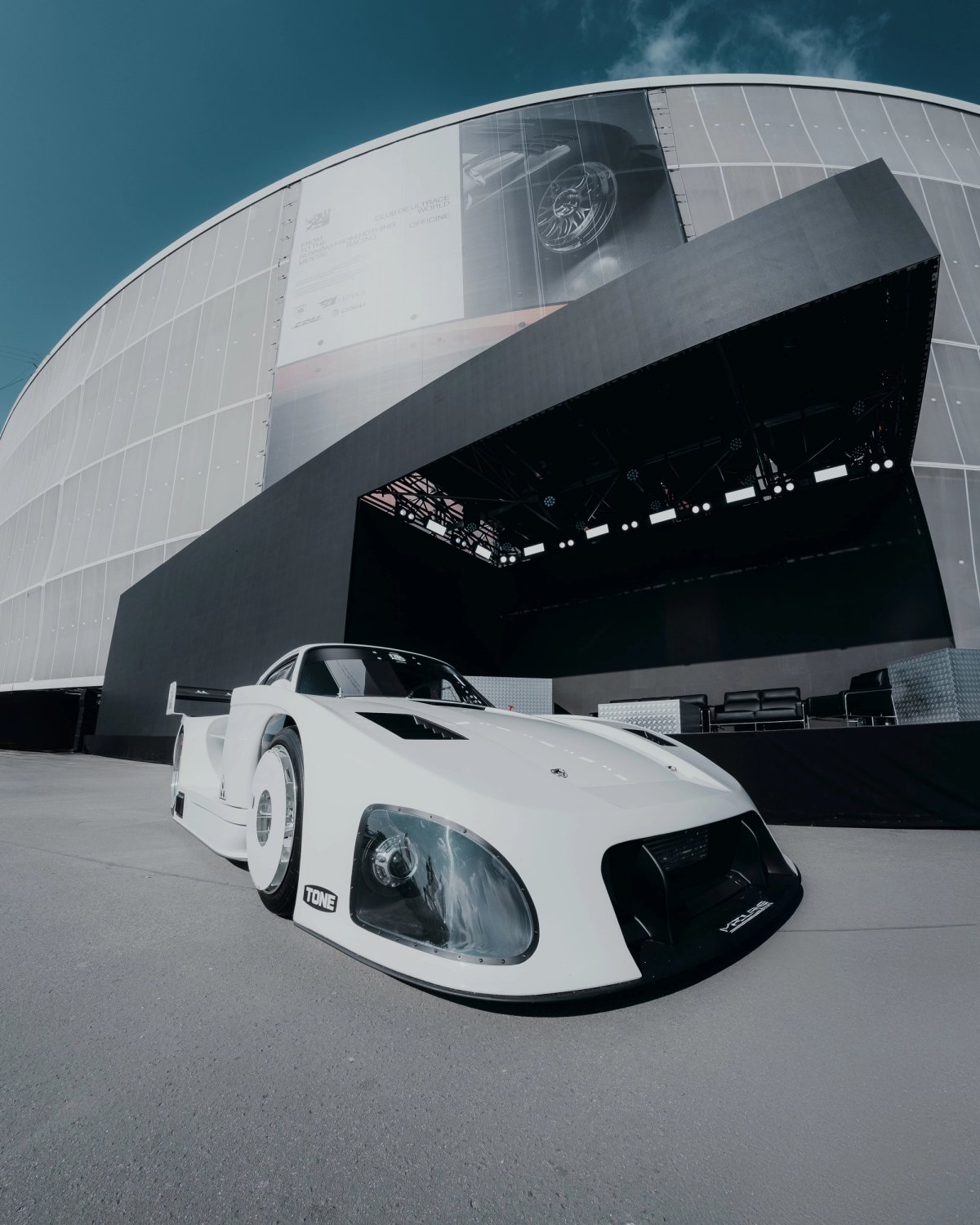
The second was the EB110 at Ultrace. That car caught me completely off guard. Stylistically it's incredible, whether you look at it as a motorsport car or picture yourself stepping out of it in an elegant suit, which fits its character perfectly. It has aged beautifully. I'd say it's even more timeless than the F40. And before the event it barely existed in my head.
As for the second kind, the most unbelievable was riding in the Unimog with the lads in Łódź. I can't really describe it, and it'll stay with me for years as the most absurd experience I've had. You sit there with headphones and a microphone, the sound is like someone drilling next to your ear, you're doing 40 an hour, everything shakes, you're up at truck height, and you stop in the middle of an intersection in Łódź because a gear won't engage. And you're just living it, grinning like a child. It was incredible.
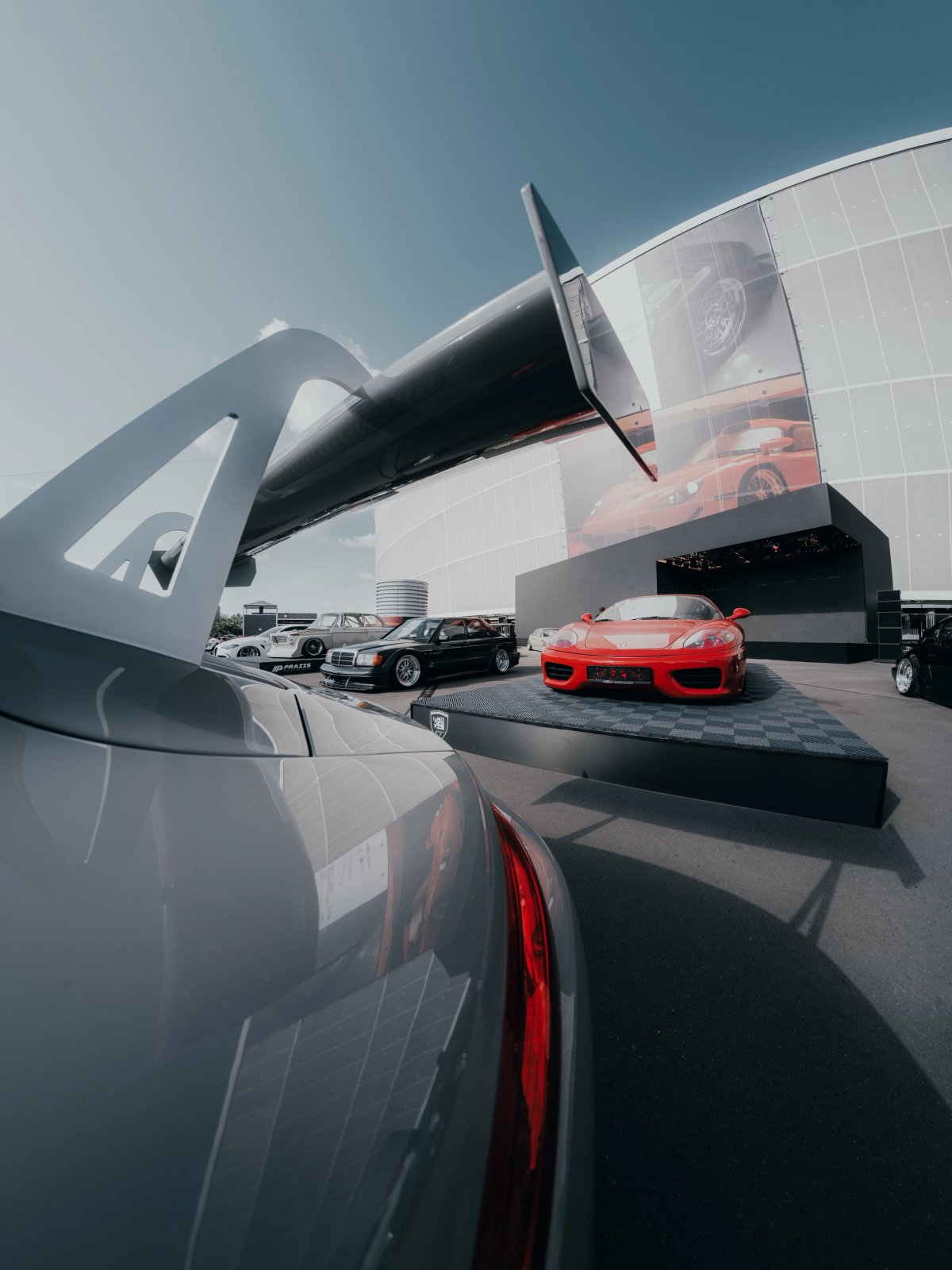
Where did "Process" come from? It's more than a photo album.
It had been sitting in my head for a very long time, a good four or five years. It grew out of something I'd started years earlier, selling prints of my photos. I did it once, then again, and the third time was going to be even better. I set myself requirements for how it should look, and they were so high that I couldn't deliver. And in my head it was simple: if I can't do it this way, I don't want to do it at all.
For the next four years I put out no prints, nothing for sale. I was blocked. It sat in my head and wouldn't leave me alone. Then eventually things in my life fell into place and I had the chance to commit more fully to photography. I decided to try living from it, from taking photos. This is the moment, I thought. I left my regular job and gave my time to this project, among other things.
The book was actually ready a year earlier. Last season I gave it to a few people to look through and tell me what they thought of the print quality and the paper. It was half as thick then, and I could see I wanted to add photos from the season that was still going. Over the winter I sat down, put it all together and printed the first final copy.
I met up with a filmmaker friend, Mateusz Kałużny, about the video material. We were going to make one short film, but the idea kept growing. When a studio became an option, a Mercedes Evo came to mind straight away. We managed to get hold of one and from there it snowballed.
A lot of people from the scene got involved. Friends helped with the website, the printing, the translations. Suddenly a whole group from the community had gathered around the project. On paper the album covers three years of my work. At the same time it documents the modified car scene and what it looks like, and it's great that people from that community helped make it. It's a portrait of the whole thing.
The title came along the way; it wasn't there at the start. "Process" is the process I had to go through over those four years, in my head, in my life, in making the album itself. You start out thinking you'll do everything on your own, and suddenly there are a lot of great people around you and you're doing something really cool together.
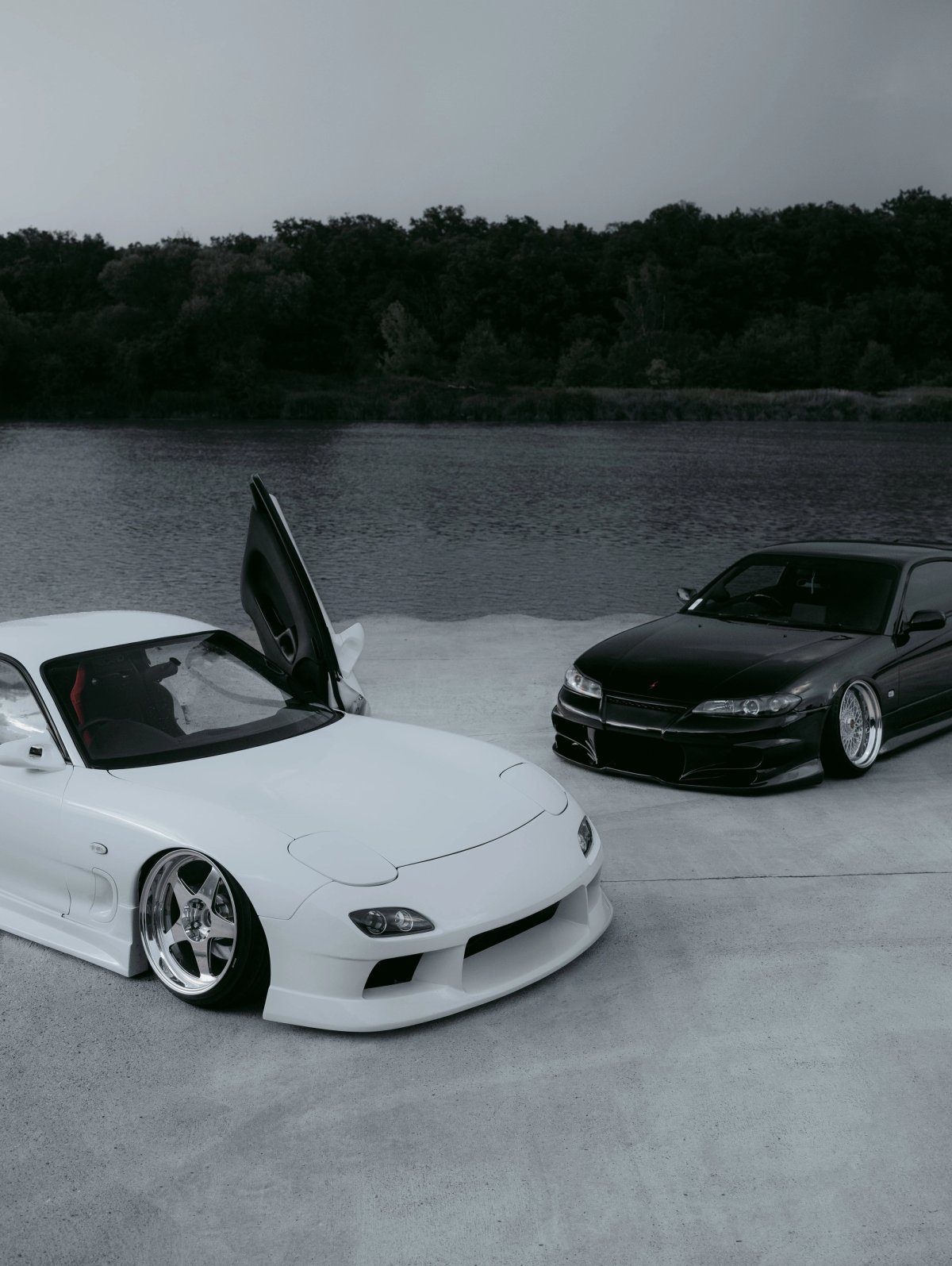
Who is the album for? People into cars, into photography, into design, or all of them?
Right now I think it's definitely for people from the scene. I'd very much like it to reach further, to people who simply appreciate beautiful things, who care about aesthetics and have a feel for them.
But I also know it's a niche thing. Tell someone who isn't into cars that it's a car album and they'll assume straight away it won't interest them. On top of that these are lowered cars, a particular taste, so it's a subgenre of all that.
Everything is digital now, so it's quite a specific product. But I'm really glad it exists in physical form, that people can hold it and leaf through it. If it ends up in someone's hands and they want it on their shelf, in a display case or simply among their books, that's an incredible experience.
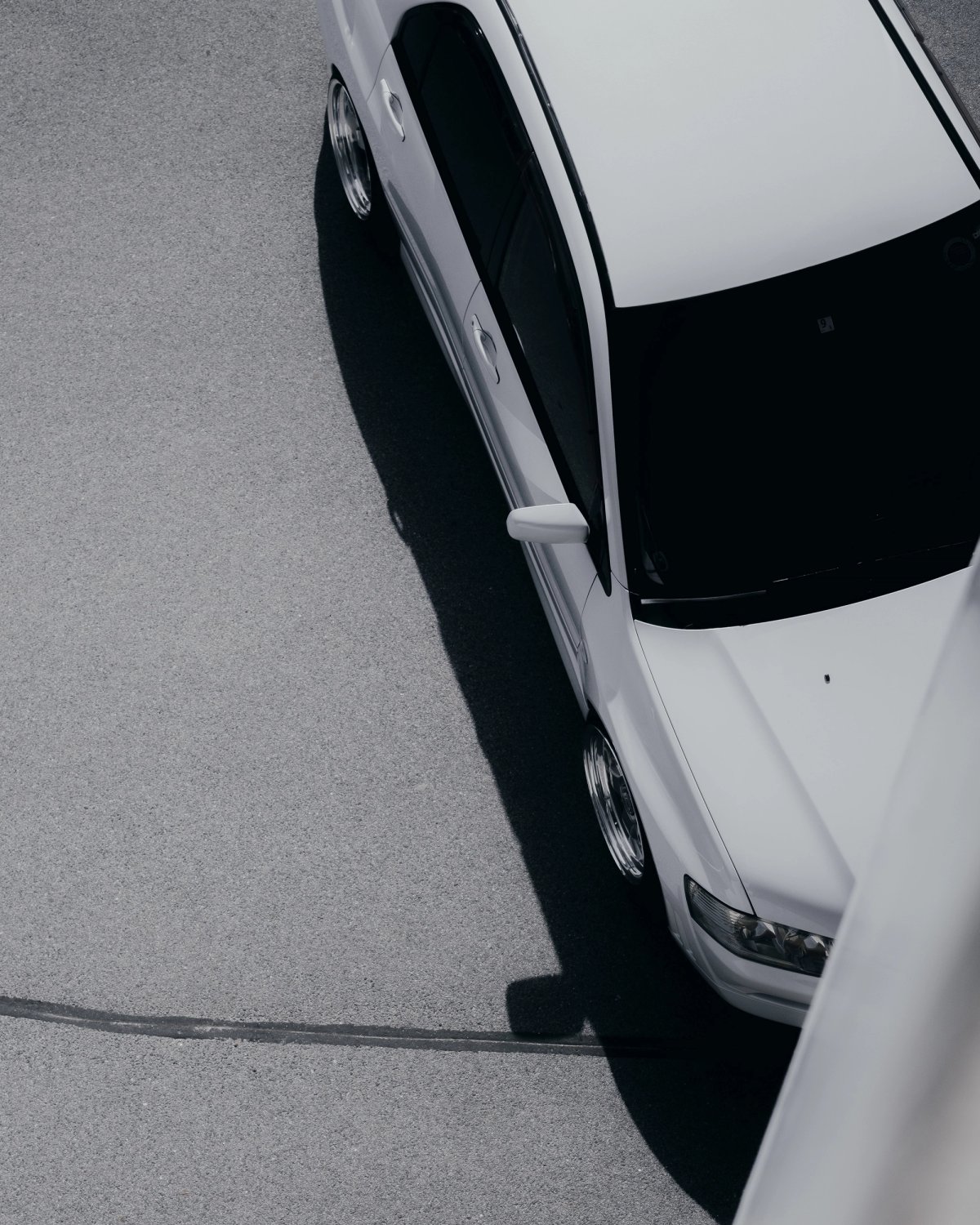
Cycling is your other passion. Has it changed the way you see movement?
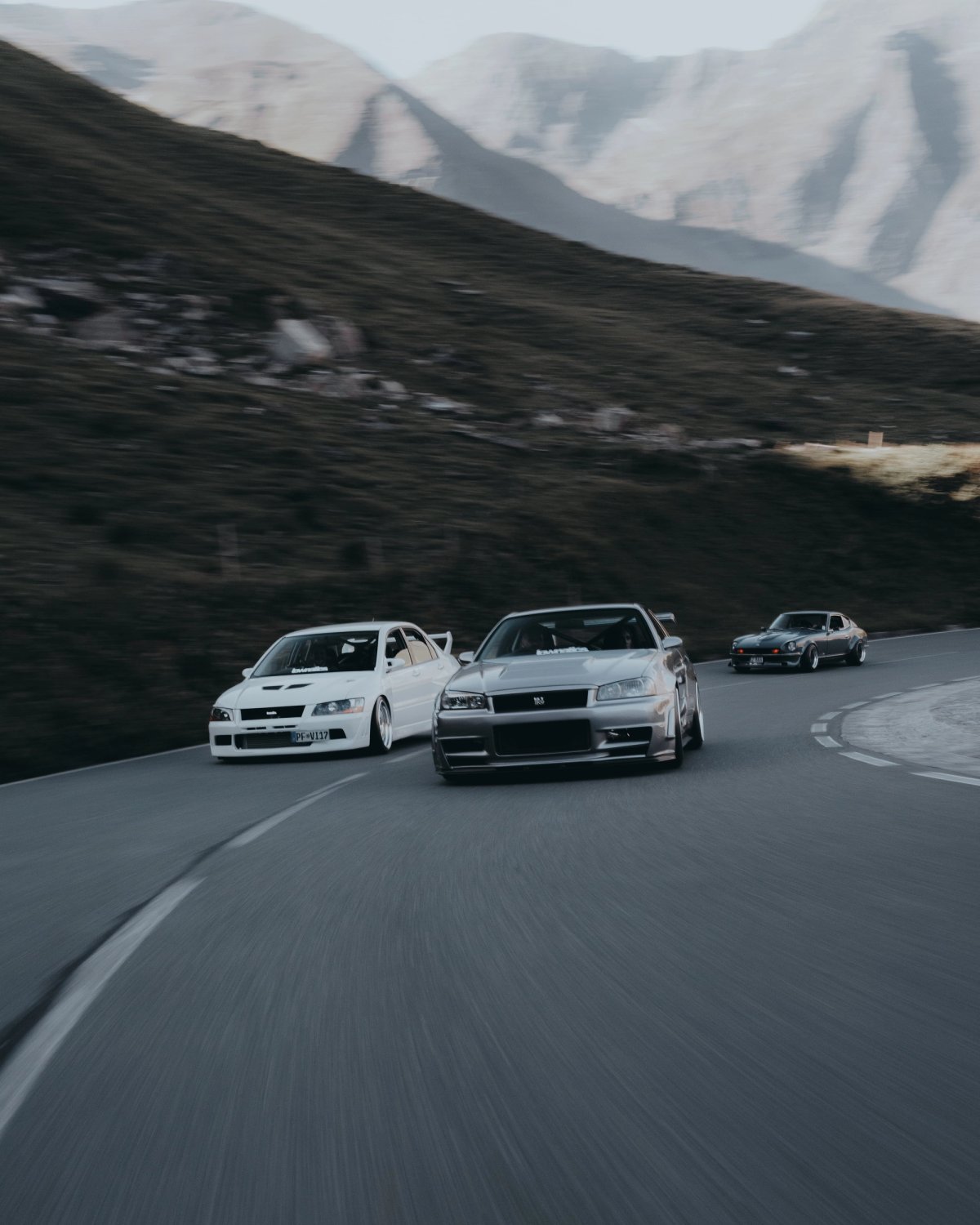
It's hard for me to say whether my interest in long exposures and motion blur came from my cycling phase. I think I was doing a bit of it before. But cycling certainly amplified it. I won't hide it: when I'm on the bike and shooting cycling, movement comes first. You can do static shots and freeze everything, but that isn't very interesting.
So it definitely has an influence. Maybe it even started working the other way round. In cycling photography almost everything I do has some movement in it, and riding shots, where I'm on the bike too, are usually all long exposures. In car photography I feel I've actually started using it a bit less lately.
I've noticed something. In car photography on Instagram right now it's all about making things as strange as possible, finding whatever will stop the viewer's eye for a split second. Everyone is fighting to hold that attention. People have reached the point of asking what they can do to make a photo look weird. In the car world everything has already been invented. Another flipped frame, negatives, grain, black and white. Everyone's racing.
I try not to overdo it. When I photograph cars I want all the attention to land on the car, not on the effects I've added. Now and then I slip a few experimental shots into a larger set, but I stick firmly to classical photography.
In cycling it's the other way round. Very few photographers use those tricks there, so when I have an idea I try strange things, negatives, rotations, distortions. Not much of it gets published, more of it sits on a hard drive, but there's more room for it, simply because few people play with that kind of thing.
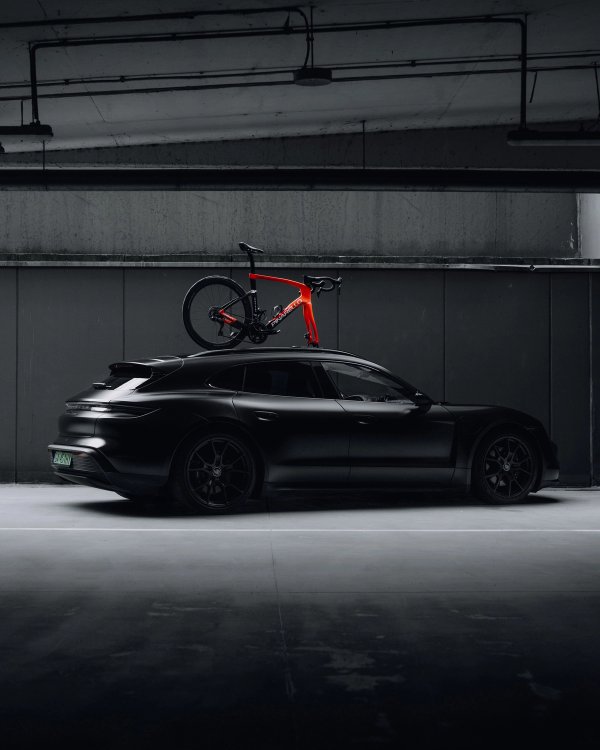
One car for the rest of your life. Which one, and what decides it?
Oh, that's a tough one. Really tough. I know in our circles everyone has a whole list, but one car for the rest of your life... I don't want to go where everyone goes and say F40 or EB110. Those are the obvious picks. I love small cars, quirky ones. But are they dream cars? I don't know.
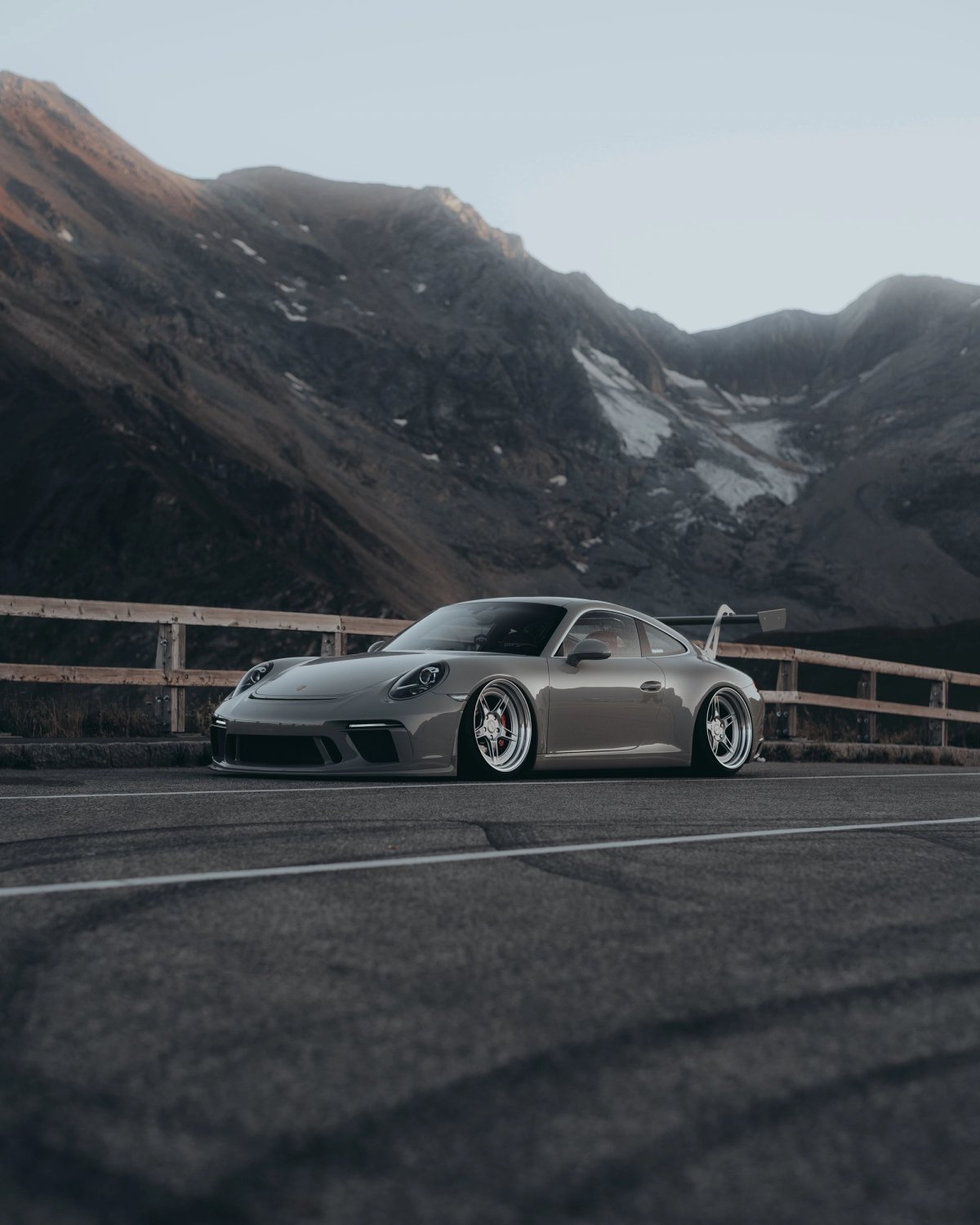
Lately I've fallen for the Porsche 964. I've had the chance to drive one and spend some time around those cars, and it's fantastic. I think it would be the 964 after all.
What would you tell a young photographer who dreams of shooting cars, to make the start easier?
A few years ago, whenever someone asked, I'd always say: go on Instagram and look at things that are beautiful, at what others are doing. Work out what's behind it. Why is it beautiful? That trains your eye and your sense of aesthetics, so you understand what works and what doesn't.
Now I think that's the wrong approach. I have a feeling that someone who gets into car photography without following all those trends, without overthinking it, will be better off. It's a bit like abstract painting. An artist who puts blotches on a canvas could paint a perfect landscape, and they chose a different path. They could do it differently, but they do it this way, and that's what makes it interesting, because they have the fundamentals.
A beginner who sees overcomplicated, experimental work and tries it will most likely do it badly, because they don't have the craft fundamentals or the understanding yet. So I'd stick to looking for good, beautiful things that can inspire you. Go to an exhibition, or even a bookshop, and browse magazines on architecture, interior design, posters. There's a lot of aesthetics in them, and they're often beautifully printed, so you take something in through touch as well as through your eyes.
Online, I'd recommend Behance. You'll find projects there by top-level people working in big teams. At one point I spent a huge number of hours on it, and it gave me a real boost in how I saw everything.
So test things, have fun and observe, but pay very close attention to what you're observing, because it might be junk.