Japan Inside: Kazuki Ohashi – The Art of Breaking the Rules
When Kazuki Ohashi's father did well in business, he bought a Ferrari Testarossa and then went away on a long trip. While he was gone, Kazuki lowered the car and reshaped the bodywork by hand. He couldn't afford to buy or develop air suspension for a Ferrari, so he modified a Honda suspension and fitted that instead.
The Testarossa's angular lines and side intakes are about as 1980s as a supercar gets, and many enthusiasts believe one should stay as close to factory condition as possible. That one became Kazuki's calling card. It was later rebuilt once more.
Far from Tokyo
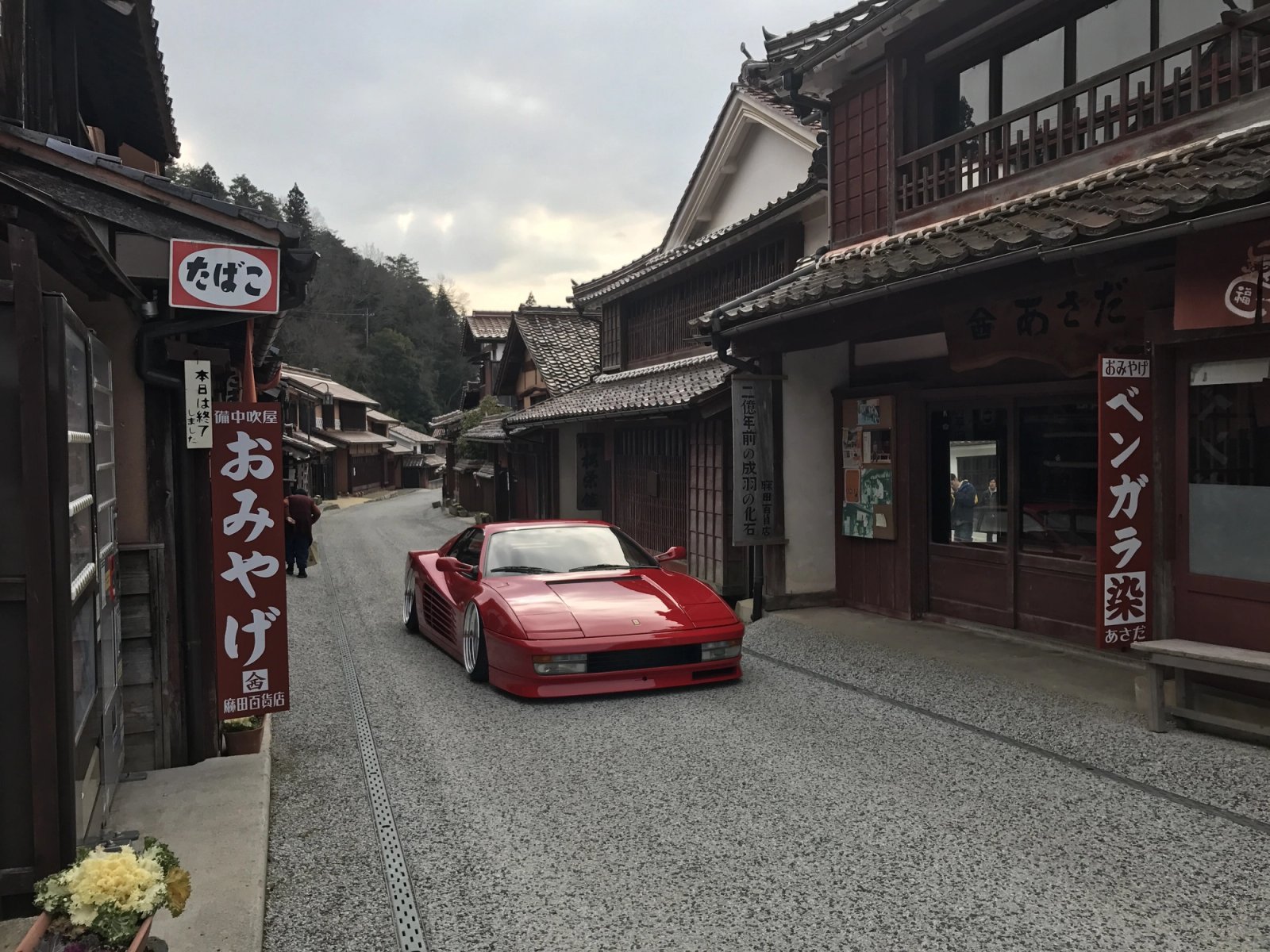
Kazuki's workshop sits in the Japanese countryside, a long way from Tokyo's neon. Among enthusiasts he has a reputation as a builder who isn't afraid to push at what a classic car can be.
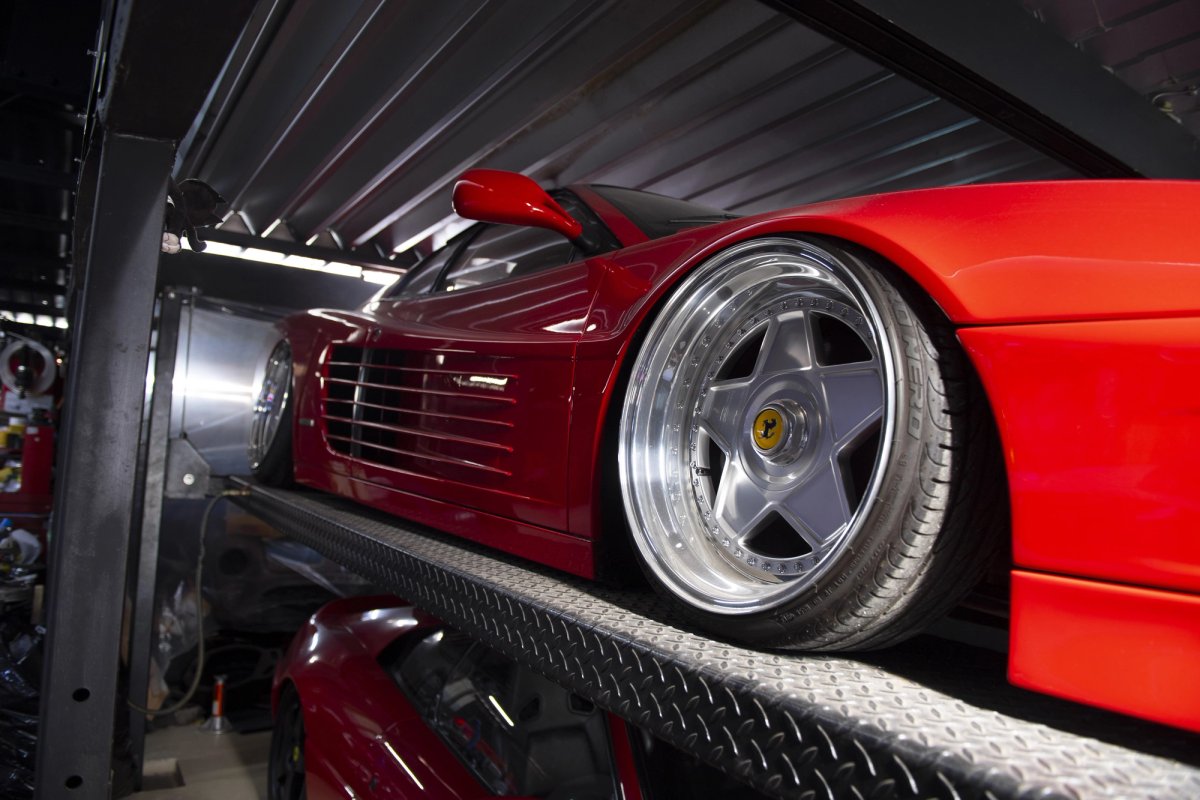
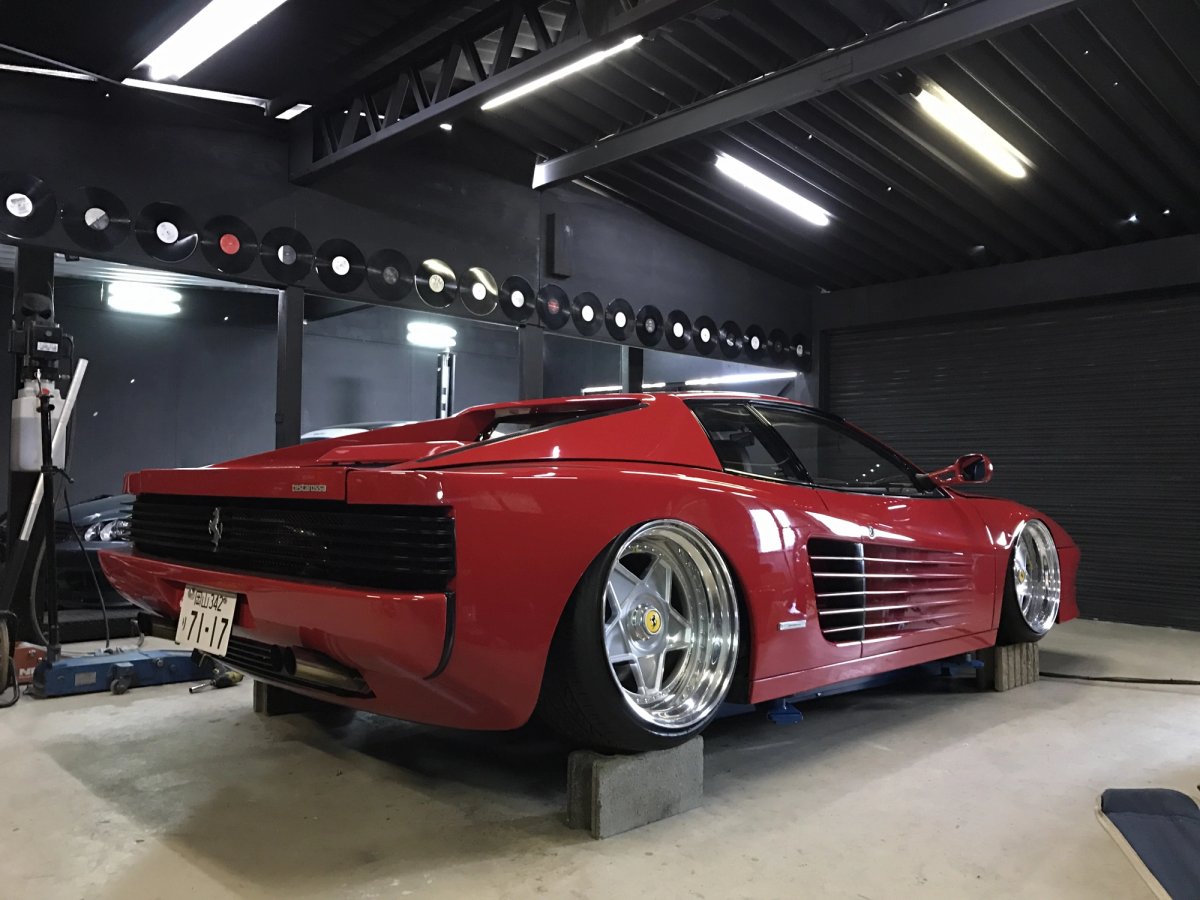
His 1989 Testarossa keeps its original 4.9-litre flat-12 and five-speed manual. It sits low on air suspension and on Autostrada Modena wheels, 18 inches at the front and 19 at the rear. The refurbished rims fill arches widened by 20 mm. The rest of the body is virtually untouched, apart from a rear bumper taken from the later 512 TR, which freshens the line at the back. There are no spoilers, splitters or other visual extras.
The Forums
Kazuki arrived at his style step by step, without following trends. Every decision on this car, from the wheel offset to the body lines, came from his own intuition. When photos of it began circulating online, the forums caught fire. Some admired the precision of the work and how fresh it made a familiar shape look. Others, mostly purists, accused him of betraying the car's original spirit.
Madlane
The workshop is called Madlane. Inside, automotive relics share the space with pop-culture references, pieces from the 1970s and '80s and details borrowed from streetwear, and it all sits together surprisingly well. Kazuki and his team build Porsches, Hondas and Lamborghinis there with an obsessive attention to detail. Whatever the badge, the finished cars carry the same signature, radical and coherent at once.
Madlane is a company he founded on his own. His father, now retired, took a completely different path. People often say Kazuki was always wealthy. He says he built everything himself, and that he is proud of it.
A Civic First
Kazuki says two scenes shaped the way he builds cars. The American custom world drew him with its freedom to modify, Europe with its elegance and purity of form. Before he touched anything exotic, he had a Honda Civic, his first exercise in proportion and coherence. It became the first of his cars to make the cover of a Japanese car magazine.
In Poland
I saw the Testarossa in Poland, at one of the events. There were many remarkable cars there, and this was the one that drew attention. It sat low and wide, and it didn't shout. Its lines are still close to the original, yet the car as a whole looks like something new.
When we spoke, I asked Kazuki how he started, what inspired him and what brought him to where he is now, as a builder and as a man with clear convictions. What follows is an excerpt from that conversation.
The Interview
Let's start at the beginning. Where did your passion for cars come from? Were you interested in them as a child, or did something awaken that interest later on?
My passion for cars started when I was 11 years old. Before that, I wasn't particularly interested in cars, and I didn't grow up in an environment where they were a part of everyday life. One day, I was at a friend's house, and he was playing a car video game. I watched him play. In his home, there was a 1958 Chevrolet Impala and a JDM sports compact. Since I visited often, over time I began to notice how special those cars were. I became interested and started playing the games myself, and that's how my love for cars was born.
In middle school, I became interested in radio-controlled models. I assembled and modified them myself. They were like toys straight out of the video games. Over time, as I delved deeper into modifications, I started focusing on making the models look stylish, paying attention to the paint, the wheels, and other details.
When I got my driving licence, I bought a Honda Civic. It was affordable at the time. However, I was fascinated by the elegance and prestige of European cars, so I wanted to bring those qualities into my own project. Back then, fitting European wheels to Japanese cars was rare. So I began looking into Wörthersee culture, doing research, and ultimately, that Honda became my first car to make the cover of a Japanese car magazine.
When my father achieved business success, he bought a Testarossa. While he was away on an extended trip, I modified the car, lowering the suspension and hand-reshaping the bodywork. At the time, I didn't have the means to buy or develop an air suspension system for a Ferrari, so I modified a Honda suspension and fitted it to the Testarossa.
That Testarossa became my calling card. It was later rebuilt once more and brought to perfection.
I never attended an automotive school or learned techniques from anyone. My passion and a pure love for cars allowed me to develop my skills as a builder.
Today, I am the owner of Madlane and operate as an entrepreneur and businessman. Madlane is a company I founded on my own. My path is completely different from the one my father took, who is now retired. People often say I was always wealthy, but I built everything myself. And I am proud of that.
You found European style and Wörthersee culture early. What was the Japanese scene like while you were growing up in the 1990s and 2000s? Were there cars on the street, magazine features or local tuners that shaped how you saw car culture?
Of course, I was influenced by Japanese car culture. Not far from my home, there's a well-known drifting circuit, Bihoku Highland Circuit, about a 15-minute drive away. When I started getting into cars, D1 Grand Prix was hugely popular, so I saw a lot of street cars set up for drifting. At the time, regulations weren't as strict as they are today. Japanese drift cars were everywhere. It essentially became normal for me.
And that's exactly why I began longing for something new, for a different kind of culture.
In retrospect, growing up in a place where that scene was part of everyday life makes me realise I was living in a truly unique environment.
Drift culture reached Europe too. The Drift King, Initial D and the D1 scene shaped a whole generation of enthusiasts here. Your own projects are clean and never excessive, and they still have plenty of character. What draws you in that direction? How do you know when a project is truly "finished"? And what inspires you most?
I always want to create something new. I don't like replicating what already exists. That's exactly why every car built at Madlane is one of a kind. But it also has to suit the surroundings of the city where it will be driven. Because it's the owner who will see and experience it every day, the car has to be part of their everyday world.
I don't have a set standard that defines a project as "finished" and, in truth, it's not really for me to decide. Perhaps the closest thing to that is the moment when the owner feels the car is neither overdone nor too restrained, that it's simply "just right."
I'm particularly sensitive to colour. I'm often inspired by the everyday: logos, interiors, utilitarian objects.
You build suspension from scratch and design wheels. As a builder, how much do hands-on craft and precision matter to you?
Many builders believe that the more work you put into a project, the better the result. But my approach is different. It takes real sensitivity to achieve maximum impact with a minimum number of changes. It's not about what you use, it's about how you use it. I focus on making the entire character of the car feel unified.
Each of us chases our own definition of "cool" and there's no single answer to what that is, because everyone's taste is different. That's why I build cars with a specific mood in mind.
For example, I can create a custom car that even someone with no interest in cars would walk past without a second glance, because it looks so natural. And yet it has BBS wheels, a completely redesigned interior, and a lowered suspension. But nothing is imposing. And that's what I call "mood."
I don't like cars that look as though someone forcefully "built" them. And the truth is, I've put more work into them than anyone else. I get my hands dirty to create something that looks effortless, something that feels as though it came into being on its own.
The 935ML is a tribute to a legendary race car, and it goes further than custom building usually does. What does it mean to you personally? And what were the hardest problems, creative or technical, that you had to solve to bring it to life?
This project pushed me to the limit of my capabilities. The build took nearly five years, because it all began with studying Porsche's history. I invested a great deal of time, energy, and money into reaching the people who truly shaped that legacy. That investment paid off many times over.
Passion has a power that draws people's eyes, even when no one knows the story behind it.
During the build, I did many things for the first time. But the greatest challenge was learning how to express something of my own while maintaining respect for someone else's culture. I started from zero and I had to travel a long road before others understood that my approach was genuine. Ultimately, however, the mood of the finished car and the level of dedication behind it made it all worthwhile.
You came to Poland in 2019, and you'll be here again in 2025. What did you make of the car culture here the first time? And what are you most looking forward to this time?
Ultrace was, without exaggeration, a life-changing experience for me. Bringing a car from Japan to a country with a completely different language and culture meant stepping into unknown territory. I'm sure that for many people around me, it might have seemed strange. But for someone who comes from a scene as small as mine, appearing at such a large, international event was a turning point. I gained an enormous amount of experience and inspiration — and today, I truly believe that Madlane is recognised around the world.
I'm really excited to be coming back this year. I don't know how people will react to the version of me that has become even more uncompromising over time, but I hope they'll appreciate it. And that they'll take an interest in the projects I'm creating now, even bolder and more personal than before. The longer you look at them, the deeper they draw you into my world.
Looking at the cars I build is like looking at my life. See you in Poland!
The 935ML
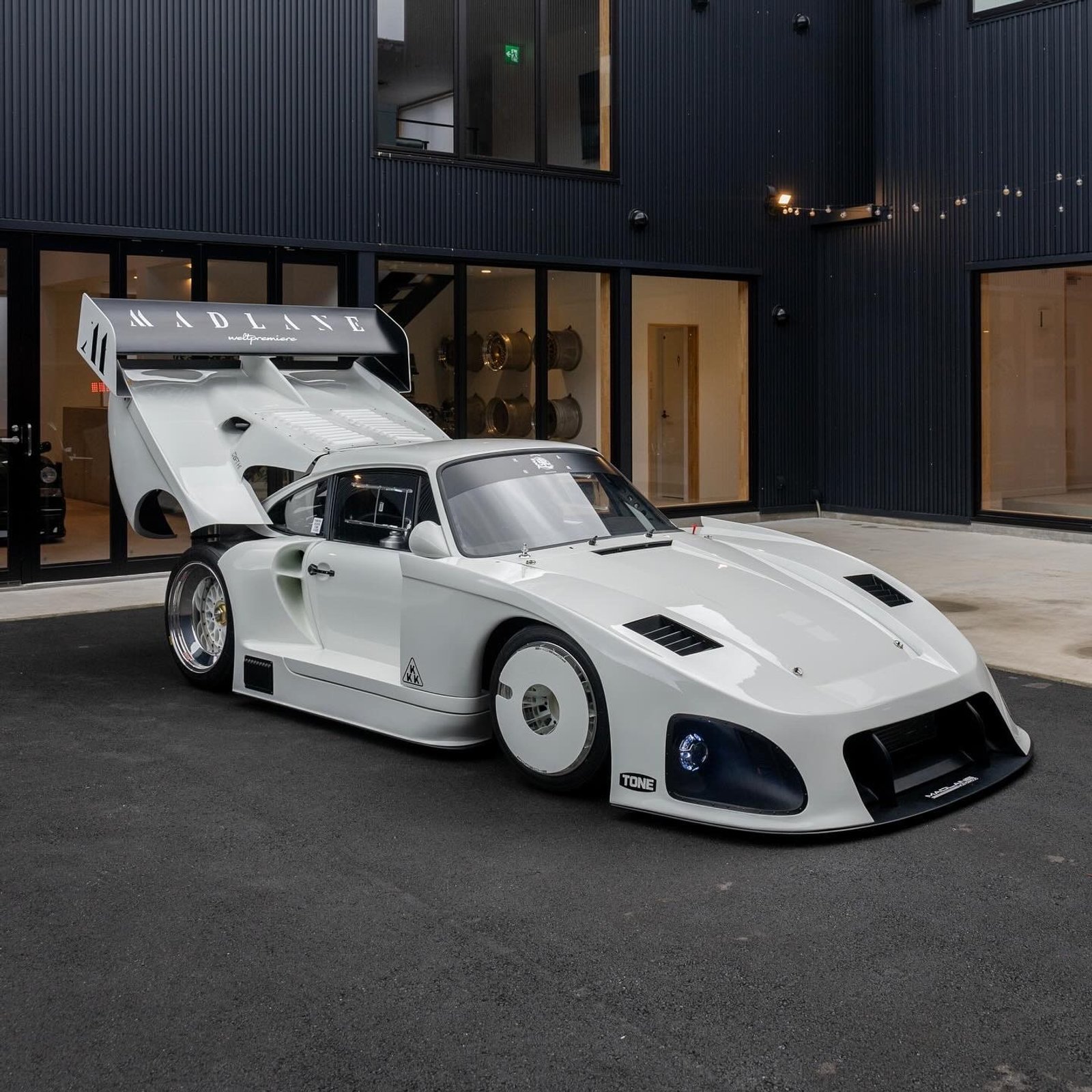
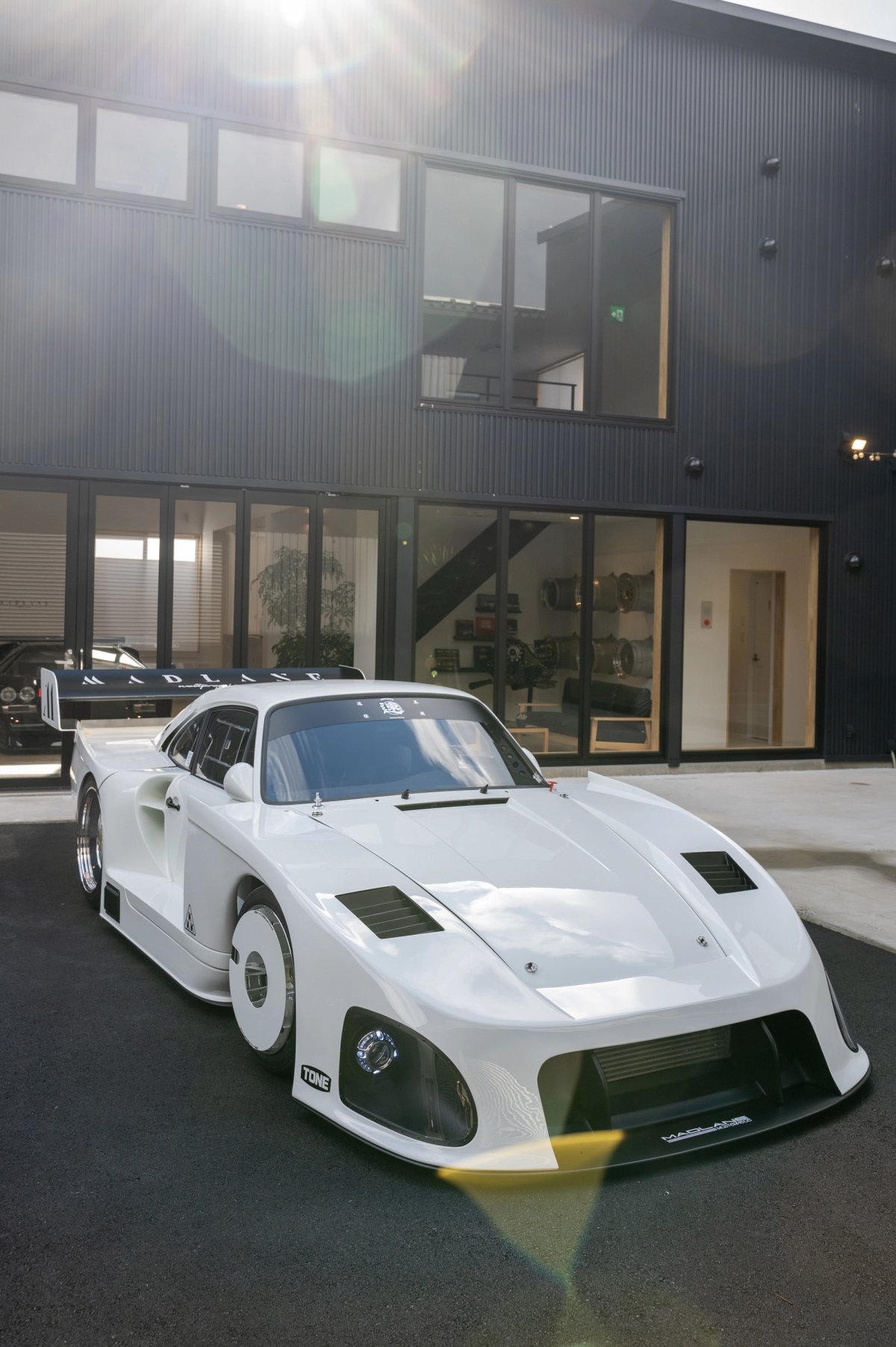
The 935ML started in Austria, where Kazuki saw an original Porsche 935 J for the first time. What stayed with him was the car's purity of purpose as much as its legendary looks. Back in Japan he began shaping his own reinterpretation, grounded in race engineering and filtered through his own sense of form.
By his account the build took nearly five years. It began with studying Porsche history, and he spent a great deal of time, energy and money reaching the people who had shaped it.
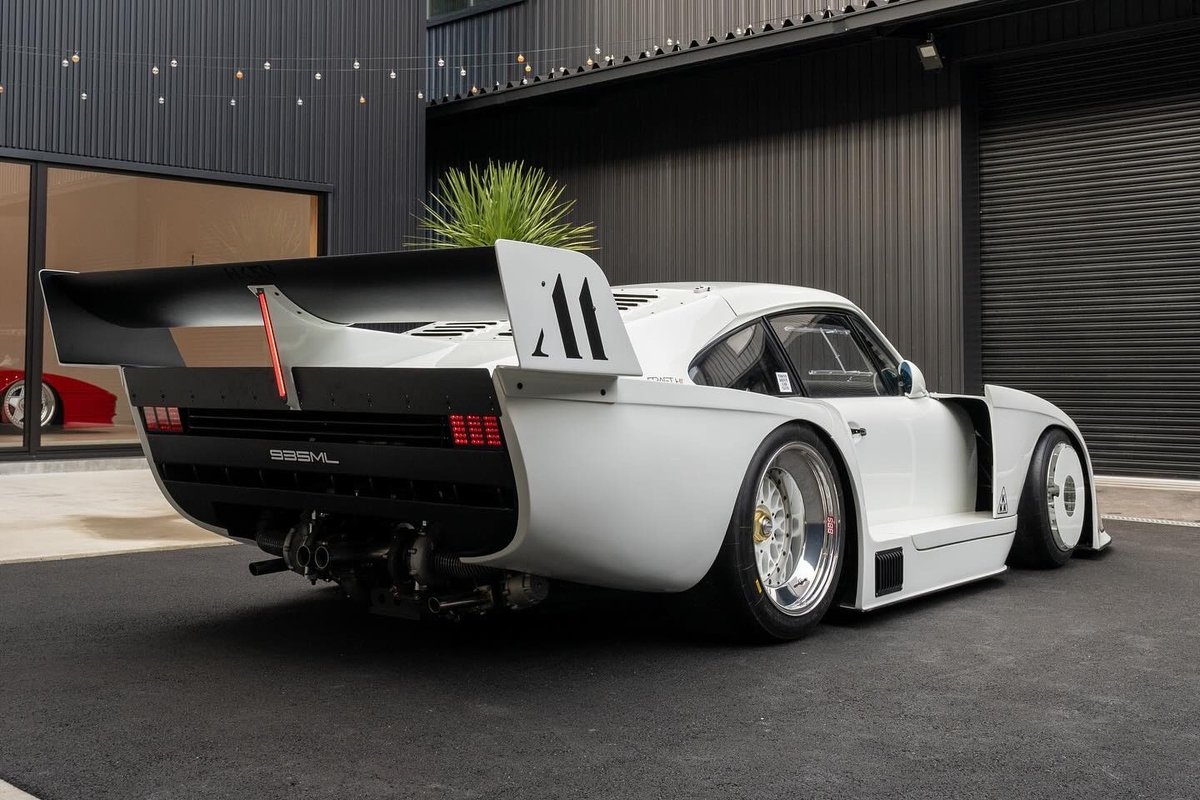
The base is a Porsche 964 Carrera, chosen for its proportions and for how far it could be adapted. Kazuki never meant it to be a replica. The 964 had to carry the whole concept, mechanically and visually.
The Deck Lid
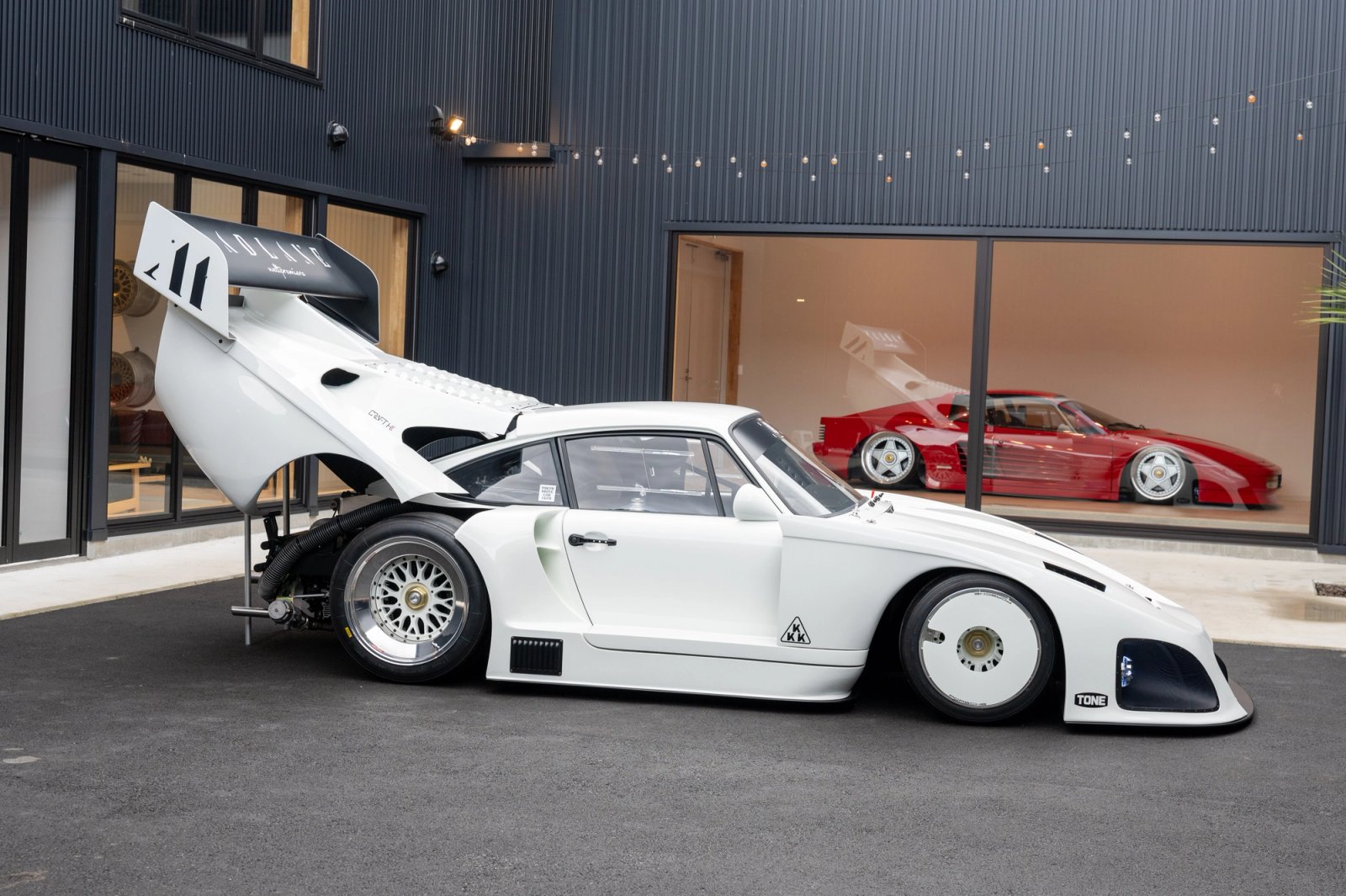
Kazuki got hold of an original rear deck lid from a 935 K4 through a contact in the United States, and that one part moved the project from concept to reality.
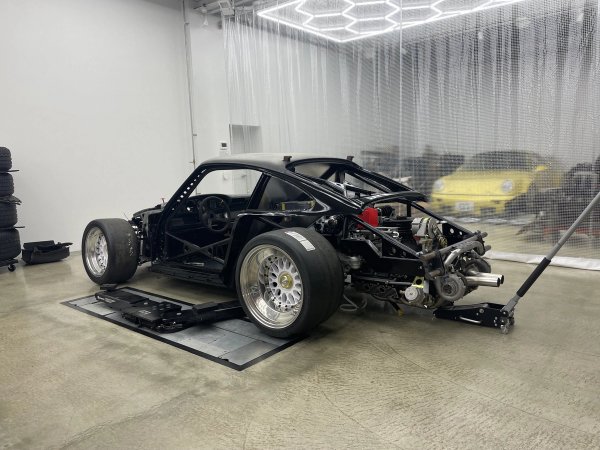
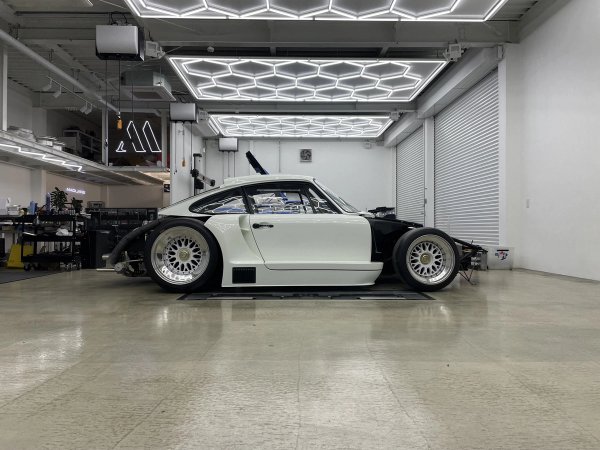
The bodywork combines traditional metalworking with modern modelling. Kazuki worked from scale models and 3D data and used parts from suppliers such as DP Motorsport and Kremer Racing. The front end merges several elements to get the proportions right. The rear, the sills and the roofline were formed by hand to recall the muscular profile of the 935 K4 while keeping the 964's structure.
Under the Body
Under the bodywork the car is built for the track. It has a reinforced tubular front frame, a pneumatic lift system, Lexan windows and a full roll cage.
The engine is an air-cooled 3.8-litre flat-six with twin turbochargers, making between 500 and 800 horsepower depending on boost. It has an aluminium intake manifold, an Inconel exhaust and a fan mounted on top, a nod to the original 935.
The gearbox is a Holinger sequential unit from a 997 RSR, mounted in reverse to lower the centre of gravity and improve balance. The suspension geometry has been reworked on the model of RUF's cantilever systems, and it responds very quickly under load.
Alive or Dead
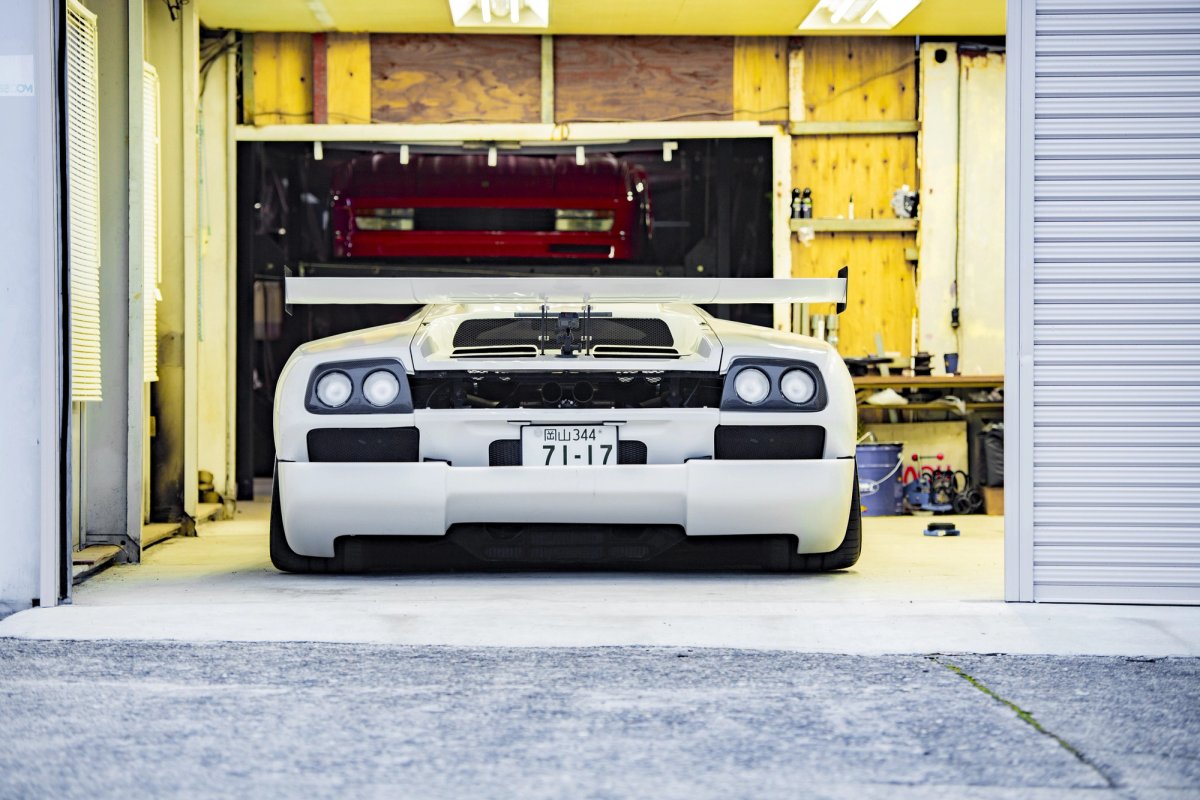
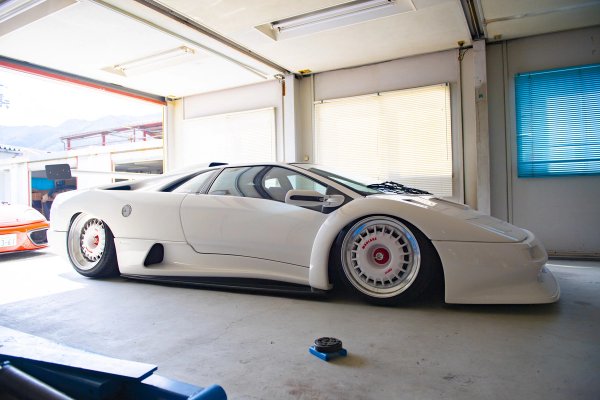
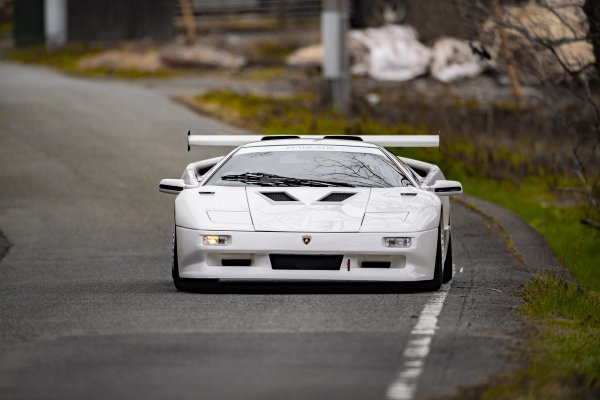
The rear wing comes from a Lamborghini Diablo GTR, adapted for this car. It sounds like an odd source, yet it sits in the silhouette as if it had always been there. The 18-inch BBS wheels are original racing units, restored in Japan and fitted with Yokohama slicks.
Inside, the 935ML keeps the analogue feel of a 911. The track additions are a DP Motorsport gauge cluster, a MoTeC M1 management system, a racing pedal box, a fire suppression system and dual anti-roll bar adjusters. The boost pressure switch has two settings, labelled Alive and Dead.
On Track
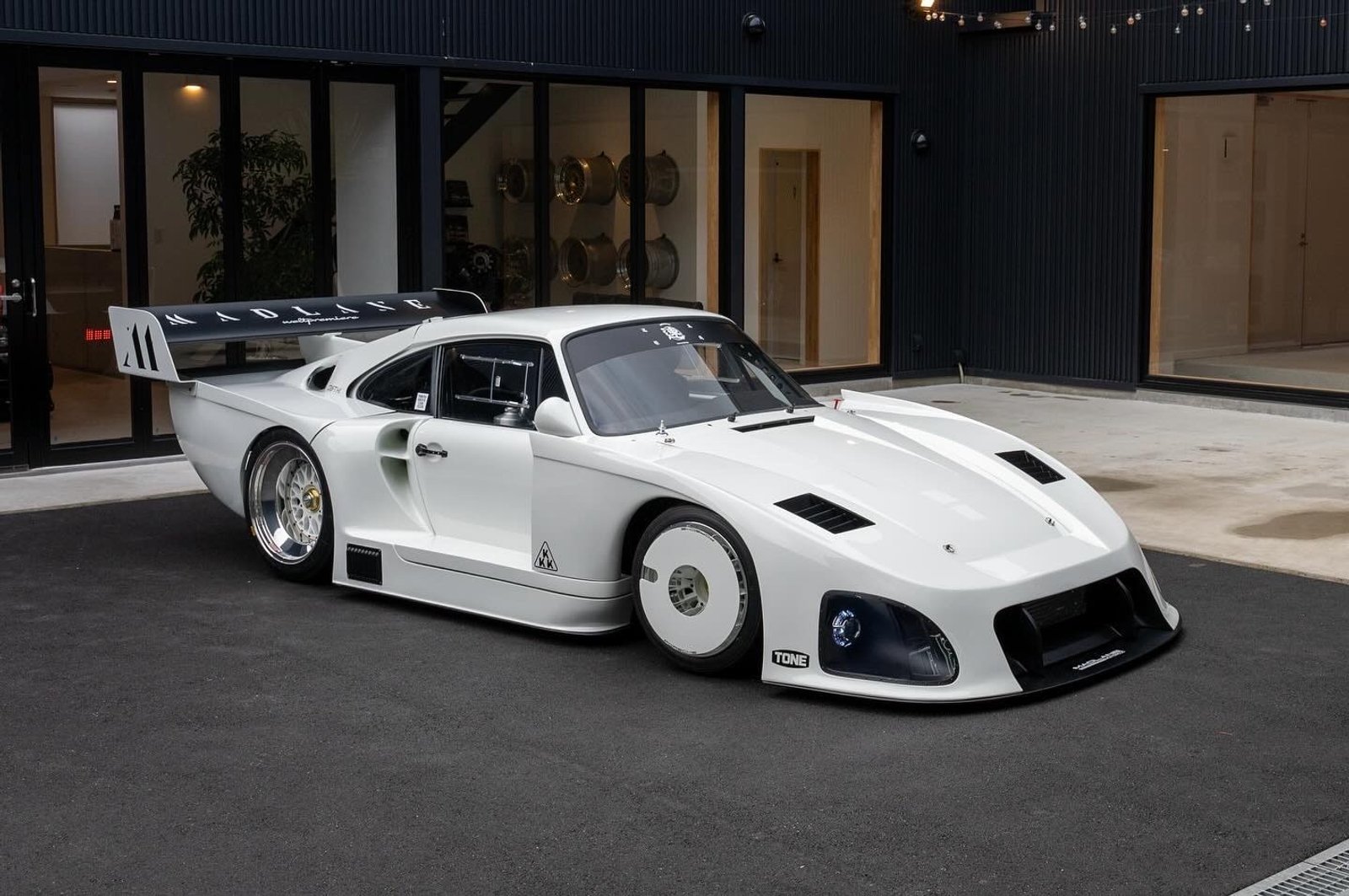
The 935ML has been shown at the Tokyo Auto Salon and at Karrera x Daikanyama Garage. Kazuki has said more than once that he plans to race it, and for him the car is a platform that keeps evolving. Lightweight carbon-fibre parts are already in the works, along with tuning for time-attack events.